
At Weinstein Construction, we get calls every week from homeowners across the Greater Los Angeles region who noticed that something was wrong in their home: maybe their front door suddenly started sticking for no obvious reason, or perhaps they noticed a crack around a window that was not there a few months ago. Or maybe their noticed one of their kids’ balls rolling slowly away on their kitchen floor.
The thing is, homeowners in the San Fernando Valley, Beverly Hills, or Pasadena should not ignore these problems! More often than not, these are actually early warning signs that something is happening at the foundational level of the home, which deserve a professional look before they get worse! So, what exactly are the warning signs of foundation damage in your Los Angeles home? When should you pick up the phone and schedule a structural foundation inspection? Let’s walk through these questions in this blog!
How to Recognize Structural Movement Symptoms in Los Angeles Homes
Structural movement is defined as any shifting, settling, or displacement of a foundation that causes the structure above it to move out of its original position. The important thing to understand is that structural movement is not always dramatic, changes can start small, and these warning signs can be easy to dismiss or explain away.
One of the most easily observable warning signs is stair-step cracks in brick or stucco exteriors. Take a walk around your home right now and see if you can spot any diagonal cracks that follow the mortar lines of your brick or stucco? If you can, that’s not just a cosmetic issue, but can be a classic indicator of foundation settlement, which means one section of the foundation is moving at a different rate than another. During your walk, you may also notice cracks forming at the corners of door frames and window openings, and these appear because as your home’s foundation shifts, it places uneven stress on the rigid framing around such openings, and the weakest points at the framing give way first.
Sloping or uneven floors are another major symptom of structural movement. If you put a marble on your floor and it rolls away, your floors are not level, and that is something that you should pay attention to. In many Los Angeles homes, this type of floor settlement is a direct consequence of the clay soils underneath. In Van Nuys, Reseda, and Sherman Oaks, homes were built on clay soil which shrinks and swells with seasonal moisture changes, and this movement repeatedly challenges and stresses a foundation over years and decades.
At the end of the day, if you have doors and windows that stick when you try to open and close them, or they pull away from their frames, or they are no longer able to close flush, these are all warning signs that are worth taking seriously and that you may need to consider house leveling in Los Angeles or floor leveling in Los Angeles.
As a homeowner, you may assume these signs show that your home is «settling» in a normal way, and to be fair, some a bit of seasonal movement can perhaps be normal, but when you have sticking doors, sloping floors, gaps between the ceiling and the interior walls, and/or cracks in the stucco finish, these issues point at structural movement symptoms that go beyond ordinary cosmetic settling. That’s the time to call foundation professionals and request that they provide you with a free structural evaluation of your home and foundation!
What Different Foundation Crack Patterns Reveal About Settlement
You should know that not all cracks are created equal! The trained eye of foundation professionals can learn a great deal from where a crack appears, which direction it runs, and how wide it has become. Diagnosing the crack pattern is one of the first steps in a Los Angeles foundation inspection and it can help determine whether your home is experiencing a minor cosmetic issue or a more serious problem.
Vertical cracks (those that run straight up and down) can be the result of normal concrete shrinkage during its curing process. Similarly, hairline vertical cracks can be common in older foundations and do not always represent a structural concern. However, when vertical cracks begin to get wider, or when you run your finger across a crack and see that its two sides are no longer flush with each other, the foundation underneath may be actively moving. At that point, a professional evaluation has to be made.
Diagonal cracks are sometimes even more informative on the state of the foundation. When cracks run at a 45-degree angle from the corners of door frames or windows, or when they run along the surface of a foundation wall, they can point to differential settlement, meaning portions of the foundation are sinking at different rates. In such cases, foundation settlement repair is likely necessary, and the sooner you take care of these issues, the less extensive (and expensive) the repair ends up being! For more information on what can be done once a problem is confirmed, see our page on foundation repair options in Los Angeles.
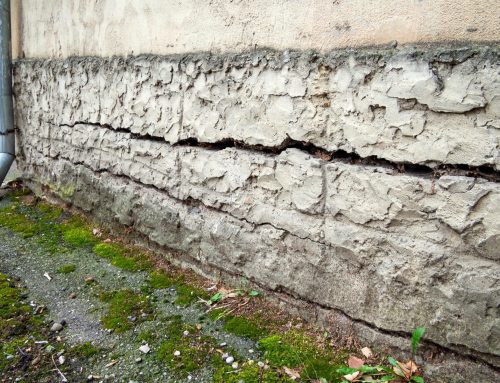
And now we get to horizontal cracks in foundation walls, which are probably the most serious crack patterns that a structural foundation inspector can find. Such cracks often indicate lateral pressure from soil or groundwater pushing against a foundation wall from the outside. This type of cracking is often seen in older Los Angeles homes where drainage has never been properly managed. This is a serious early warning sign of a sinking foundation and one that should not be ignored!
Finally, it’s also important to note that the relationship between interior and exterior cracks is significant. Here, if you have an interior crack that aligns with an exterior crack at the same position, that can often be a strong sign that the damage to the building extends through the full thickness of the wall. This is a much more significant finding than that of a surface blemish and it is one that typically only a foundation crack repair in Los Angeles can fix. Because such fixes always begin with a proper diagnosis, you must base the right repair on understanding what is causing the crack in the first place.
Why Soil Conditions and Seismic Activity in Southern California Affect Foundations
Have ever wondered why foundation problems seem so much more common in Los Angeles than in other parts of the country? Well, the answer basically boils down to two environmental factors: our soil and our seismic environment. Unfortunately, in our region, these two factors do not work in any homeowner’s favor.
In the Greater Los Angeles area, we typically build our homes on clay soil, which expands when it absorbs moisture and shrinks when it dries out. Our area, especially the San Fernando Valley, is well known for its expansive clay soils, and during our rainy seasons, the clay beneath our homes absorbs water and pushes upward against the home’s foundation. Then, during our dry seasons, the clay soil contracts and pulls away. Sadly, this back-and-forth movement, which is repeated season after season over the course of many years, can cause even well-built foundations to stress, fracture, and fail.
For hillside properties in areas like Beverly Hills and Pasadena, the challenge is even greater, as hillside soil movement is driven not just by moisture fluctuations, but also by gravity, drainage patterns, how water travels down a slope. When a hillside home does not have proper drainage around it, the soil beneath and around the home and its foundation can shift over time. This can lead to ever larger structural movement that goes unnoticed for a long time, until significant (and visible) damage has already occurred. To learn more about how slope affects structural stability, see our guide to hillside foundation repair in the Greater Los Angeles area.
And then on top of all that, we have Los Angeles’s seismically active environment. Earthquake foundation damage can occur not just from a major seismic event but also from the accumulated stress of repeated small ones. Each small earthquake puts additional strain on a home’s foundation, and in older homes, particularly those built in the 1950s or earlier, such accumulated stress produces cracking and structural displacement.
How serious is earthquake foundation damage in Los Angeles? Well, it can be very serious, especially in homes already subject to soil movement or drainage issues. Look, an earthquake can literally supercharge your home’s existing problems, and this is why a foundation inspection is so important after any significant seismic activity. In fact, FEMA structural damage assessment guidelines recommend a post disaster foundation inspection. In other words, homeowners and commercial property owners in earthquake prone areas should have their buildings evaluated by qualified structural professionals before occupying a structure after an earthquake hits, particularly when any of the warning signs we discussed above are visible. For a deeper look at this topic, see our article on foundation repair after earthquakes.
What Happens During a Professional Foundation Inspection in Los Angeles
One of our new clients, a homeowner in Van Nuys, asked us recently: what’s the difference between having a construction contractor walk through my home and having a real structural foundation inspection done by someone like Weinstein Construction? Well, we think that’s a great question, and the answer matters a great deal!
For one, while a contractor may know a bit about this subject and an look at a few cracks and offer his informal opinion, a structural foundation inspection is a completely different thing! The latter is a methodical, documented process that follows a specific protocol and that gives a homeowner actual data and findings. At the end of the day, the right repair plan cannot be developed without an accurate diagnosis, and that accurate diagnosis requires a proper inspection by someone with the right technical skills and experience for the job! This is true whether you own a home in Santa Monica, a hillside property in Pasadena, a mid-century bungalow in Burbank, or a mansion in Beverly Hills.
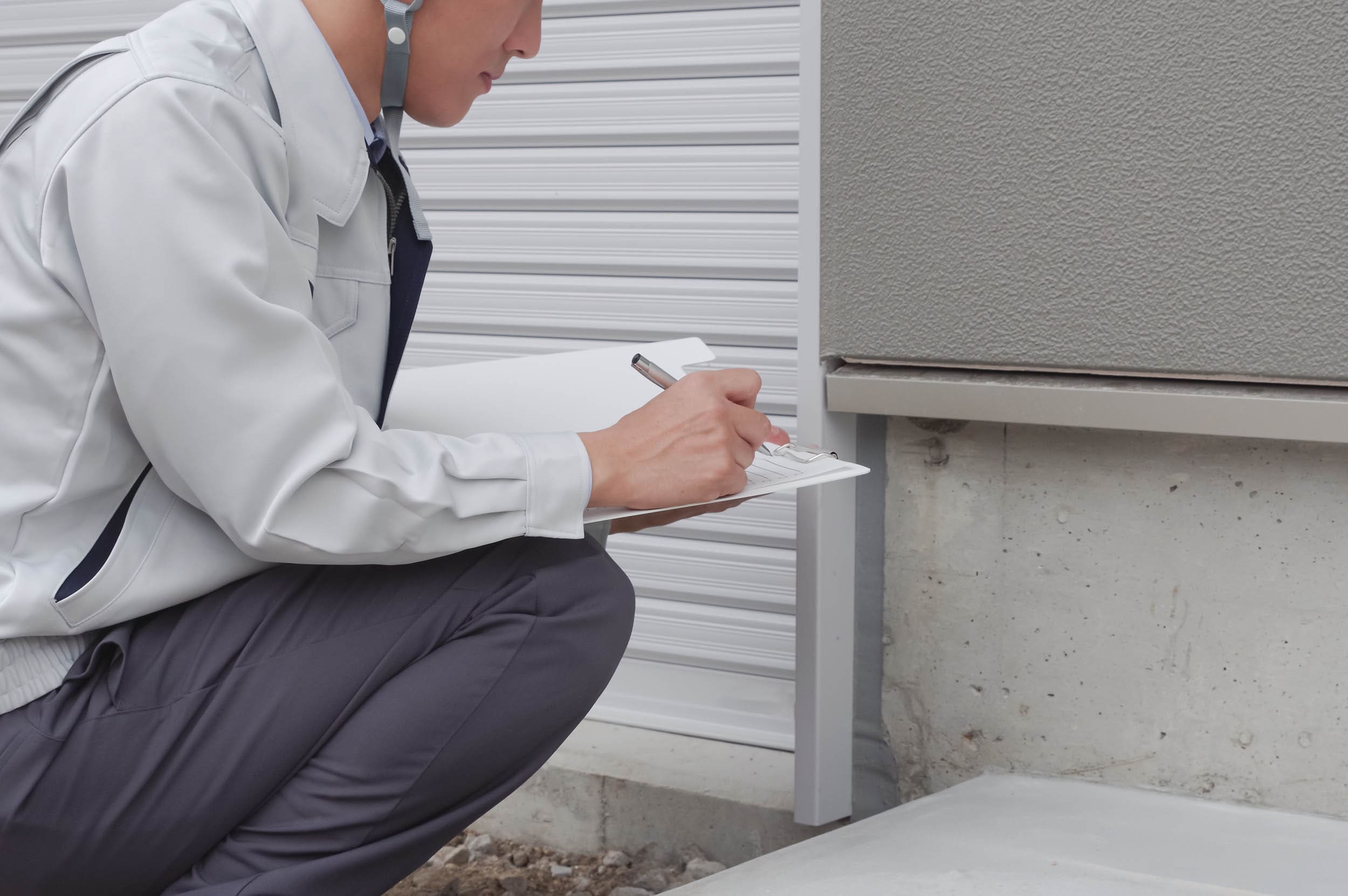
At Weinstein Construction, our foundation professionals begin with floor elevations taken at multiple points throughout the home. These measurements quantify how much variation exists in floor level from room to room, providing objective data about the direction and degree of any foundation movement. We also do a thorough visual perimeter review of the exterior foundation follows, during which our specialists examine crack patterns, visible displacement, and the overall condition of foundation materials.
If the home has a crawl space, we typically also go into that space and evaluate it, as the underside of a home can often reveals data that is simply invisible from the interior (e.g., signs of moisture intrusion, wood rot, pest activity, and compromised bearing conditions). When we identify moisture as a contributing factor, our inspection can also address foundation waterproofing needs, because in the Greater Los Angeles region, flooding during our rainy seasons is a great influencer of foundation problems. Learn more about how we handle moisture issues in our article on crawl space encapsulation in Los Angeles.
Our professionals can also take a look at the drainage around the property, as poor grading and inadequate drainage solutions are a leading cause of soil movement and foundation erosion in our region. Then, the inspection concludes with a report that summarizes all structural movement findings and recommendations clearly, so that the homeowner has a full picture of what their property needs and what their options are.
Would you like to speak with one of our specialists before committing to an inspection? We encourage you to speak with a Los Angeles foundation specialist by calling us at (818) 855-5752. Our team members are standing by to answer your questions!
When to Schedule a Structural Foundation Inspection Before Damage Escalates
Here is something that homeowners often learn the hard way: foundation problems are far less expensive to resolve when they are caught early! Here are some foundation rules! A crack that is a quarter inch wide today will not stay that way. Foundation settlement that causes a home’s floors to slope slightly in one room will, over time, spread and affect the structural integrity of the home’s load-bearing walls, its door and window frames, and its overall stability.
How serious are foundation cracks in Los Angeles? In Los Angeles homes built largely on expansive clay soils, and with our region’s earthquake exposure, even minor cracks deserve a professional evaluation. Again, our combination of soil movement and seismic activity means that what may look like a hairline crack today can become a larger structural issue within the passing of one rainy season!
If you are wondering when is the right time to schedule a structural foundation inspection, that time is now, and not after an earthquake caused visible damage. The time is now, not after the rainy season has passed and you see water pooling around your home and you are counting the new cracks in your stucco walls. Consider calling for a professional inspection as soon as you notice the warning signs we discuss in this blog!
And then, for Los Angeles hillside homes, proactive monitoring is critical. Such properties are subject to gradual soil movement that occurs slowly, invisibly, until it reaches a point of visible structural consequence. For homeowners in Beverly Hills, Pasadena, and the eastern San Fernando Valley, among others, one thing is clear: it is sensible and responsible to schedule a free, regular inspection of a home’s foundation every few years, and especially after heavy rain events or seismic activity. And if you live in Van Nuys, Reseda, or other San Fernando Valley communities where clay soil conditions are pronounced, you should also consider inspecting your foundation on a regular basis.
Here is the bottom line: if you ignore the warning signs, that will never make your foundation problem go away. All you do is allow the problem to get worse, for cracks to become bigger, and for repair costs to grow. On the other hand, if you catch these issues early and act on them quickly, you will almost always face a significantly smaller financial burden than if you wait. If your inspection finds no issues, that’s great, and you will have peace of mind knowing that your home’s foundation is safe and sound!
Schedule a structural foundation inspection with Weinstein Construction today! We perform structural foundation inspections throughout the Greater Los Angeles area, including Van Nuys, Reseda, Beverly Hills, Santa Monica, Pasadena, Burbank, Encino, Sherman Oaks, and the surrounding San Fernando Valley communities. We have been working for decades with your neighbors and in your neighborhood, and with our region’s soil conditions, seismic activity, and strict building codes. In other words, you will benefit from all of our decades of experience working for you at your property’s inspection!
If you have noticed any of the warning signs described in this blog, do not wait. The professionals at Weinstein Construction will assess the condition of your foundation, document all findings, and provide you with a clear and honest picture of what your home needs. Visit our foundation repair services in Los Angeles page to learn more about everything we offer.
Call Weinstein Construction today at (818) 855-5752 for a free, no-obligation structural foundation inspection. Protect your biggest investment before small problems become large ones!